

Why AI is already reshaping InDesign
AI is now transforming everyday DTP work. InDesign is no longer just a layout tool: it's becoming an assisted-production environment, from visual concept to final output.
Adobe Firefly is progressively integrated across the Adobe ecosystem, with a focus on professional use and compatibility with demanding brand workflows.
Key AI features in InDesign
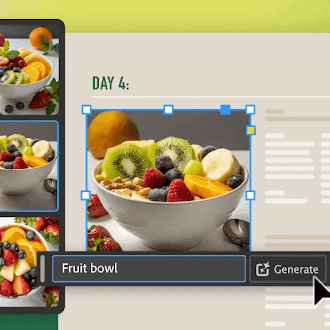
Text to Image generates visuals directly in layout frames. Useful for rapid prototyping, adapting to a late brief, or producing a variation without leaving the tool.
Generative Expand extends an image and fills missing areas coherently. It cuts forced crops and reduces back-and-forth in production.
Generate Alt Text speeds up image description for accessibility, with human review recommended before publishing.
Generate Text (beta) proposes phrasing and tone variants to accelerate editorial iterations in the layout.
Productivity: what teams actually gain
The main observed benefit is cycle compression: fewer team round-trips, fewer repetitive production tasks, and more time for art direction.
In a multi-channel B2B context, these gains translate into steadier deadlines and faster time-to-market across print and digital.
Limits to anticipate in 2026
Some functions remain beta depending on the use case. Human oversight is still required to guarantee compliance, brand consistency, and editorial quality.
Resolution and language availability of AI features can vary across tools and versions.
What to put in place now
To leverage AI in InDesign, teams need to scope high-value use cases, define validation rules, and connect product data (PIM/DAM) to content production.
The goal isn't to automate for automation's sake, but to secure publishing cadence with consistent quality.